Calendar
What to Plant in November in Zone 7: Garlic, Bulbs and Winter Greens
 By Petr Hess · Updated November 4, 2026 · 7 min read
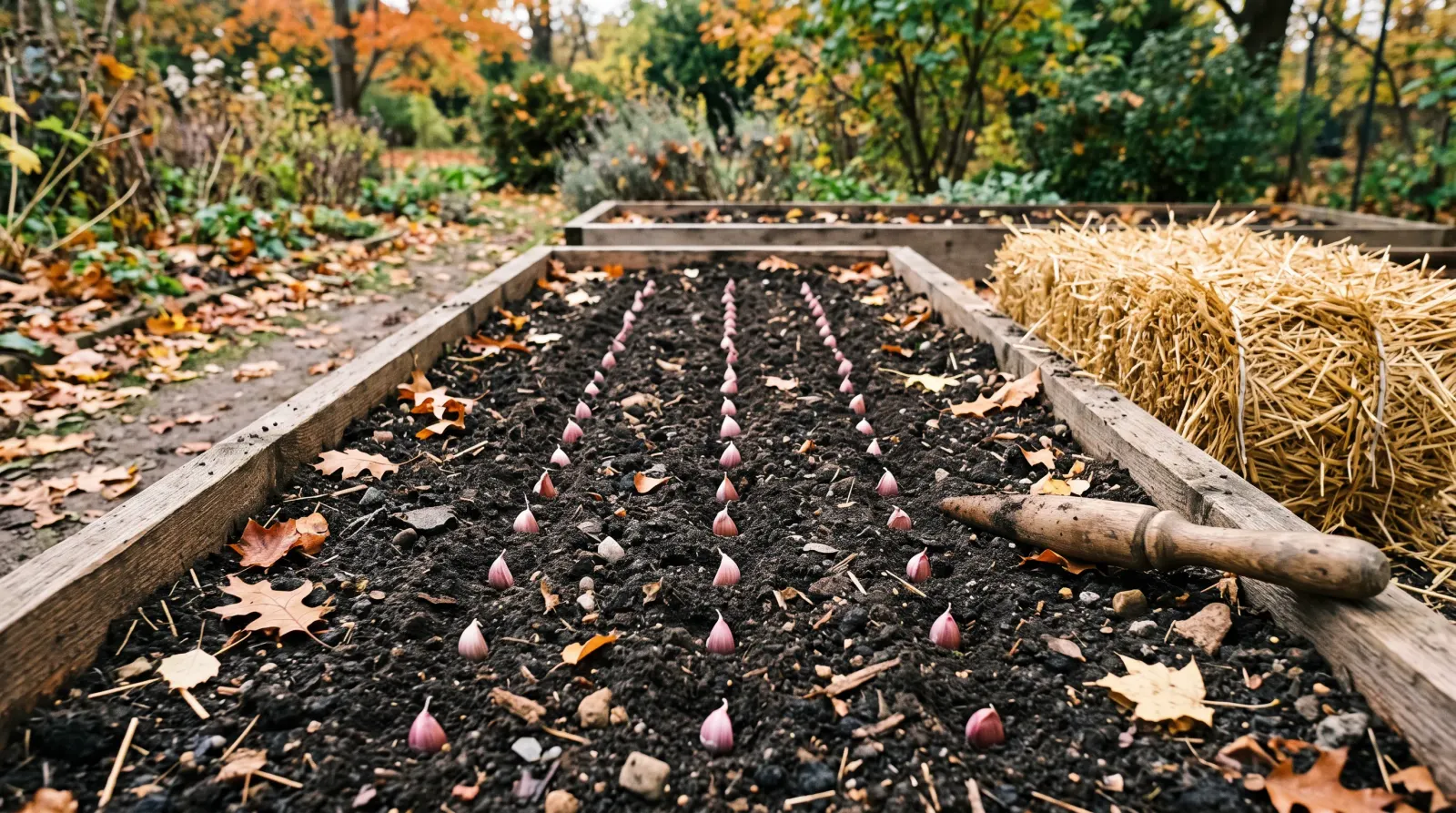
Here is what to plant in November in zone 7: garlic (aim for the first half of the month), spring-flowering bulbs, trees and shrubs, and hardy greens such as spinach and lettuce inside a cold frame. Most seed sowing is over for the year. The rest of the month is harvest and cleanup: pick kale and collards, mulch root crops and get beds covered before the ground freezes.
Use this page alongside the zone 7 planting calendar, which covers the full year. Dates below come from University of Maryland Extension (central Maryland, zone 7a/7b) and Clemson HGIC (South Carolina Upstate), and they vary with your microclimate, elevation and how close you are to the coast.
Why now: roots keep growing in cool soil until it freezes, so anything you plant in the next two weeks gets a head start that a spring planting cannot match. Wait until December and the window has mostly closed.
At a glance: zone 7 in November
- Typical frost dates: first frost around October 25, last frost around April 15 (UMD, central Maryland). Much of the NC piedmont has frost by the end of October (NC State).
- Daylight: drops below 10 hours from about mid-November, when vegetable growth becomes very limited (UMD).
- Plant now: garlic (by mid-month), shallots and multiplier onions if not done in October, spring bulbs, trees and shrubs.
- Under cover only: lettuce, spinach, beets, cabbage and Chinese cabbage in a cold frame or under row cover.
- Harvest: kale, collards, cabbage, turnip greens, spinach, carrots, beets and turnips.
- Key jobs: mulch root crops, pull wild garlic, remove bagworm bags, clean up fruit trees, water if there has been no rain for 2 to 3 weeks.
Sow indoors
There is no vegetable you need to start indoors in November in zone 7. Spring transplants such as onions, cabbage and broccoli are started in late winter. Indoor work this month is about winter color and kitchen herbs:
- Force bulbs for the holidays. Clemson HGIC suggests bringing paperwhites, tulips, hyacinths or crocus indoors to force for holiday color.
- Start a windowsill herb pot. Oregon State's November calendar suggests an indoor window garden of lettuce, chives and parsley, and the idea travels well. A bright south window gives a small but steady supply. Expect slow growth in short days; a grow light helps.
- Bring houseplants in before hard frost, and check the undersides of leaves for insects first.
Sow or plant outdoors
Garlic: plant by mid-November
Garlic is the one vegetable that truly belongs to November in zone 7. University of Maryland Extension's planting calendar gives a fall window of mid-October to mid-November for central Maryland. Clemson's chart for the South Carolina Piedmont ends on October 15, so if you garden in the warmer, southern part of the zone, plant this week rather than later.
- Plant individual cloves pointed end up, covered with 1 to 2 inches (2.5 to 5 cm) of soil, 3 to 6 inches (8 to 15 cm) apart (UMD).
- Softneck types store longest. Hardneck types send up a flower stalk called a scape; snap it off in spring for bigger bulbs.
- Mulch along the rows with shredded leaves or straw to block weeds.
- Harvest comes in early summer. In central Maryland, tops start to die back in late June and harvest is around July 1.
For cultivar choice and spacing in more detail, see our guide to growing garlic in zone 7.
Greens in a cold frame or under row cover
Open-ground sowing is finished, but Clemson HGIC's Upstate calendar lists lettuce, beets, cabbage and spinach in cold frames for a winter or early spring harvest, and Chinese cabbage, lettuce and spinach under a cold frame or row cover. Spinach is the most reliable: UMD notes it overwinters with protection and resumes growth in spring. Sow it in cool soil, since seed germinates poorly above 70°F (21°C).
Keep expectations realistic. With under 10 hours of daylight, plants sown now will sit nearly still until February, then grow fast as days lengthen.
Spring bulbs
Plant daffodils, tulips, hyacinths, crocus, alliums, snowdrops and scilla until the ground freezes. If squirrels or voles raid your beds, Clemson lists daffodils, common hyacinth, alliums, snowdrops, scilla and Crocus tommasinianus among the bulbs they tend to leave alone. Daffodils need well-drained soil and at least 5 to 6 hours of sun. Water bulbs in after planting and hold fertilizer until next fall.
Trees and shrubs
Fall planting reduces transplant shock because roots grow while tops rest. Water new trees and shrubs so the root ball stays moist but not soggy. Clemson gives 2 to 3 gallons (8 to 11 liters) over the root ball per inch (2.5 cm) of trunk diameter, and skip watering if the root ball is already saturated.
Harvest
Cold makes many brassicas taste better. UMD notes that frost raises the sugar content and improves the flavor of many cool-season crops.
- Kale and collards: pick a few leaves from each plant at a time to keep new growth coming, as Clemson advises for kale.
- Cabbage, broccoli and Brussels sprouts: keep cutting as heads size up.
- Spinach, lettuce, arugula and mizuna: harvest leaves from fall sowings, and cover the bed on cold nights.
- Carrots, beets and turnips: leave them in the ground under a thick insulating mulch, which UMD says protects the roots from freezing through December.
| Crop | Rough cold limit | What to do |
|---|---|---|
| Cabbage, collards, kale | About 10°F (-12°C) | Usually fine uncovered in November |
| Spinach | About 20°F (-7°C) | Row cover on hard-freeze nights |
| Broccoli | About 21°F (-6°C) | Harvest heads before a hard freeze |
| Lettuce | Light frost only | Cover, or move under a cold frame |
Limits from Clemson HGIC. Floating row cover adds about 4 to 8°F (2 to 4°C) depending on fabric weight. Put it on in the afternoon to trap ground heat, and avoid plastic touching leaves.
Garden jobs
- Mulch and cover. Spread leaves, compost or aged manure over empty beds and top with straw. Clemson suggests leaving some leaves in place as habitat for fireflies.
- Manage row covers. On mild sunny days, open low tunnels or pull covers aside. UMD warns that heat builds up inside quickly.
- Go easy on fertilizer. Feed overwintering leafy greens sparingly. UMD notes that heavy feeding in low light can cause nitrate buildup in greens picked December to February.
- Pull wild garlic while the soil is moist so the bulb comes out too. If you use a broadleaf herbicide, apply it when the air is above 50°F (10°C) and follow the label.
- Remove bagworm bags from evergreens. Each one holds overwintering eggs.
- Divide perennials that have died out in the center, and replant the healthy outer sections.
- Clean up fruit trees. Remove mummified fruit, dead branches, weeds and leaf litter. If you spray horticultural oil, do it only between 45 and 90°F (7 and 32°C), on unstressed plants, with no rain due for 24 hours.
- Water if it stays dry. With no real rain for 2 to 3 weeks, give new plantings, fall vegetables and lawns a deep soak (Clemson).
- Plan winter protection for crops you want to keep picking. Our overwintering vegetables guide covers which crops last longest and how to protect them, and the winter garden checklist covers tools, hoses and beds.
Project of the month: keep your cold frame or greenhouse from freezing
A cold frame or small greenhouse is what turns zone 7's winter from a dead stop into a slow harvest of spinach and lettuce. The hard part is temperature swings: a closed frame can overheat on a sunny afternoon and still drop below freezing on a clear night. Before the first hard freeze, plan how you will vent on warm days and if you need a small heat source for the coldest nights. Our greenhouse heating and ventilation guide is the next step.
Frequently asked questions
Is it too late to plant garlic in zone 7 in November?
Not in the first half of the month. University of Maryland Extension gives a garlic window of mid-October to mid-November for central Maryland. Clemson's Piedmont chart closes on October 15, so in the southern, warmer part of zone 7 November is late but still workable if you plant as soon as possible.
Can I sow vegetable seeds outdoors in zone 7 in November?
Not much. Days are short and growth slows sharply once daylight drops below about 10 hours, which in Maryland runs from mid-November to late January. Sow lettuce, spinach and other hardy greens only inside a cold frame or under row cover, and expect a slow winter or early spring harvest.
When is the first frost in zone 7?
Hardiness zones describe winter lows, not frost dates. As a guide, University of Maryland Extension works with a first frost around October 25 and a last frost around April 15 for central Maryland, and NC State notes that much of the North Carolina piedmont sees frost by the end of October. Check your own county's data.
How cold can kale and spinach go?
Clemson HGIC gives rough limits of about 10°F (-12°C) for cabbage, collards and kale, about 20°F (-7°C) for spinach and about 21°F (-6°C) for broccoli. Floating row cover adds roughly 4 to 8°F (2 to 4°C) of protection.
Sources
- University of Maryland Extension, When to Plant Vegetables (vegetable planting calendar)
- University of Maryland Extension, Growing Garlic in a Home Garden
- University of Maryland Extension, Fall Vegetable Gardening
- Clemson HGIC, Planning a Garden (planting chart)
- Clemson HGIC, This Month in Your Garden: November 2023
- Clemson HGIC, This Month in Your Garden: December 2024 (cold tolerance and row covers)
- NC State Extension Gardener, Fall Vegetable Garden
- Oregon State University Extension, November garden calendar (EM 9615)
- Clemson HGIC, This Month in Your Garden: November 2022