Planting dates
When to Plant Garlic in Zone 7: Dates, Varieties and Planting Steps
 By Petr Hess · Updated November 4, 2026 · 6 min read
In most zone 7 gardens, the best time to plant garlic is mid-October to early November. That gives each clove several weeks to grow roots before the soil turns cold, then a winter of chilling that triggers bulbing in late spring. Colder 7a sites should aim for the earlier end of that window, and warmer 7b and coastal sites can plant into mid-November.
This page covers timing, variety choice and planting depth for zone 7 only. For the other jobs due this month, see our zone 7 November garden calendar.
Why it matters now: it is early November. If your garlic is not in yet, you are near the end of the main window in most of zone 7, so plant this week or next rather than waiting for spring.
What zone 7 tells you, and what it doesn't
A USDA hardiness zone is based on the average annual extreme minimum winter temperature, shown on the USDA map in 10°F zones and 5°F half zones (7a and 7b). Zone 7 means the coldest winter night averages 0 to 10°F (-18 to -12°C). That tells you garlic will survive the winter. It does not tell you your frost dates or how fast your soil cools in fall, which is what really sets planting time.
That is why the extension services in zone 7 states give slightly different windows. Use the table below to find the one closest to you, then adjust for your site. Low, frost-prone spots and higher elevations cool sooner; south-facing beds and urban gardens stay warmer longer. Dates vary by microclimate, so treat any window as a guide.
Zone 7 garlic planting dates from extension services
| Region | Recommended planting window | Source |
|---|---|---|
| Western Virginia | Early to mid-October | Virginia Cooperative Extension |
| Eastern Piedmont and southern Virginia | November into early December | Virginia Cooperative Extension |
| Maryland | Mid to late October | University of Maryland Extension |
| East Tennessee | September 1 to November 1 | University of Tennessee Extension |
| West Tennessee | September 15 to November 15 | University of Tennessee Extension |
| Central North Carolina | September 15 to November 30 | NC State Extension (Central NC planting calendar) |
The common ground across these sources is mid-October to early November. Virginia Tech explains why the window matters: plant too early and garlic makes too much tender top growth before winter; plant too late and it may not build enough roots. Fall-planted garlic also needs about 8 weeks of cold soil to chill properly, which it gets naturally over a zone 7 winter.
A simple rule for your garden
- Zone 7a, or a cold or high site: aim for mid-October.
- Zone 7b, coastal or urban site: aim for late October to early November.
- Running late: planting in mid to late November still works in the warmer parts of zone 7. Plant as soon as you can and mulch.
Hardneck or softneck garlic for zone 7
Zone 7 sits in a transitional climate, so you can grow both main types. University of Tennessee Extension suggests trying one or two varieties of each to see which handle your winters and suit your cooking.
- Hardneck (A. sativum subsp. ophioscorodon) grows a flower stalk called a scape. It is generally more winter hardy and tends to make fewer, larger cloves. Cut the scapes in late spring so the plant puts energy into the bulb.
- Softneck (A. sativum subsp. sativum) has no scape, often makes more, smaller cloves, and stores longer. It is the type usually sold in grocery stores. Softnecks can be less winter hardy, so pick a variety known to do well in your area. Only softnecks can be braided.
- Elephant garlic is a type of leek (A. ampeloprasum). It has very large, milder cloves but does not store as well as true garlic.
Varieties named by zone 7 extension sources
| Type | Varieties | Named by |
|---|---|---|
| Hardneck | Chesnok Red, German Extra Hardy | UT Extension; NC State Extension (performed well in the South) |
| Hardneck | Music | UT Extension; Virginia Tech (reliable in western Virginia, per growers) |
| Hardneck | Duganski, German Red, Purple Glazer | UT Extension |
| Hardneck (rocambole) | Spanish Roja, Carpathian | Virginia Tech (worth trying) |
| Softneck | Inchelium Red, California White | UT Extension |
| Softneck (silverskin) | Idaho Silverskin | Virginia Tech (worth trying) |
Virginia Tech notes its suggestions come mostly from grower feedback, not controlled trials, and that garlic performance is very site specific. Buy certified seed garlic or cloves from a local grower. University of Maryland Extension warns never to plant grocery-store garlic, which can carry disease without symptoms.
How to plant garlic in zone 7
- Pick the spot. Full sun, at least 6 hours a day per NC State Extension, in well-drained soil. Tennessee Extension gives a target pH of 5.8 to 6.5 and recommends raised beds where drainage is poor, because Tennessee winters are often wet and, as Virginia Tech notes, waterlogged soil rots cloves.
- Feed the bed. Work in compost and a complete fertilizer before planting.
- Split the bulbs on planting day. Plant the largest cloves. Clove size relates directly to bulb size at harvest.
- Set the depth. Plant each clove pointed tip up with 1 to 2 inches (2.5 to 5 cm) of soil over it.
- Space them out. Leave 4 to 6 inches (10 to 15 cm) between cloves and 12 to 18 inches (30 to 45 cm) between rows, or plant on a 4 by 4 inch (10 by 10 cm) grid in a raised bed.
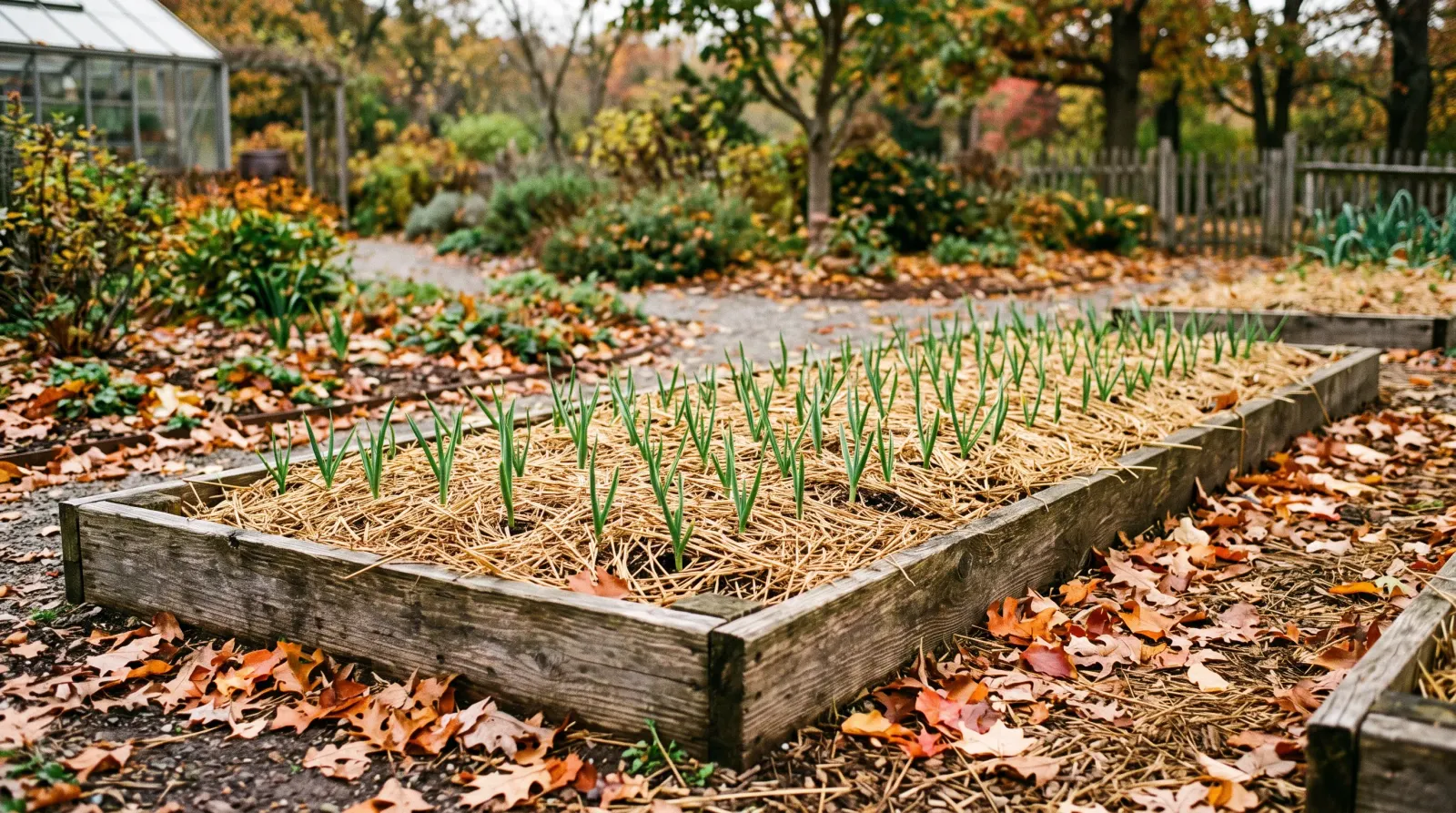
- Water, then mulch. Fall is often the driest time of year in Tennessee, so check soil moisture after planting. Cover the bed with straw or shredded leaves to block winter weeds and reduce frost heaving.
Winter and spring care
- Through winter: leave the mulch in place. Virginia Tech notes that cold itself does not damage most properly planted garlic; frost heaving of the soil is the bigger risk to new roots, and mulch helps prevent it.
- Early spring: in heavy soils, rake the straw back once growth resumes so bulbs don't stay too wet. Side-dress with nitrogen when plants are about 6 inches (15 cm) tall. Maryland Extension adds feeds in April and, if needed, late May.
- Late spring: remove hardneck scapes. Keep weeding; garlic is a poor competitor.
- Harvest: start checking bulbs from mid-May to mid-June in Tennessee; central Maryland harvest is around July 1. Lift when 4 to 6 green leaves remain, then cure in a shaded, airy place for several weeks.
Next step: once your cloves are in, read our complete garlic growing guide for spring feeding, scape removal and curing so the bulbs store well.
Frequently asked questions
Is it too late to plant garlic in zone 7 in November?
Usually not. Extension windows in zone 7 states run into early or mid-November, and Central North Carolina lists planting through November 30. Plant as soon as you can so roots establish before the soil turns cold.
Should I plant hardneck or softneck garlic in zone 7?
Both can grow in zone 7. University of Tennessee Extension notes hardneck is generally more winter hardy, while softneck stores longer but can be less hardy. Many gardeners grow one or two of each to see what suits their site.
How deep should I plant garlic cloves in zone 7?
Set cloves pointed tip up with 1 to 2 inches (2.5 to 5 cm) of soil above them, according to Virginia Tech and University of Maryland Extension, and about 4 to 6 inches (10 to 15 cm) apart, per Virginia Tech.
Can I plant garlic from the grocery store?
University of Maryland Extension advises against it. Store garlic can carry disease without showing symptoms, and University of Tennessee notes most commercial softneck garlic is grown in very different climates such as California. Buy certified seed garlic or cloves from a local grower.
When will zone 7 garlic be ready to harvest?
Fall-planted garlic in zone 7 is usually harvested in early summer. University of Tennessee suggests checking bulbs from mid-May to mid-June, and University of Maryland gives about July 1 for central Maryland.
Sources
- University of Maryland Extension, Growing Garlic in the Home Garden
- University of Tennessee Extension, Garlic for the Tennessee Vegetable Garden, D75 (2019)
- Virginia Cooperative Extension, Time to Plant Garlic, 2906-1347 (2009)
- NC State Extension, Lee County Center, Growing Garlic in the South (2022)
- USDA Agricultural Research Service, Plant Hardiness Zone Map (2023)