Guide
Overwintering Vegetables: Which Crops Survive Winter and How to Protect Them
 By Petr Hess · Updated November 4, 2026 · 7 min read
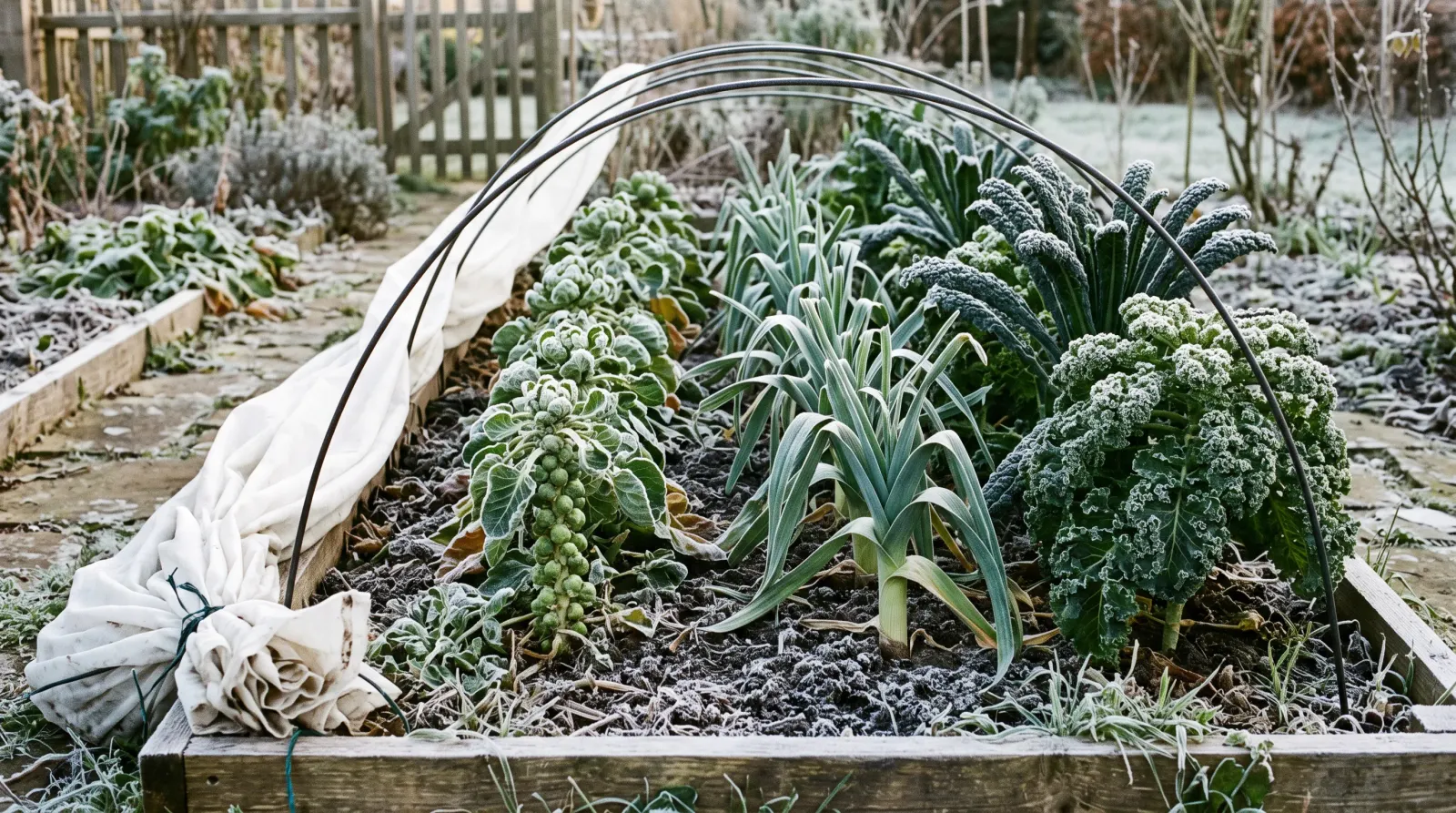
Overwintering vegetables means keeping hardy crops alive through the cold months, either to harvest them during winter or to let them grow on for an early spring crop. The crops that do it best are hardy roots such as parsnips and carrots, alliums such as leeks and garlic, and tough greens such as spinach, kale and collards. Most need some protection: mulch for roots, and a row cover, low tunnel or cold frame for leaves.
This guide is part of our seasonal garden jobs section and covers the northern hemisphere.
Why it matters now: by early November, winter crops have to be at or near full size, because growth almost stops once days get short and cold. Iowa State Extension makes the same point for low-tunnel crops. What you have in the ground now is what you will overwinter, so the job this month is protecting it.
Two ways to overwinter vegetables
- Hold and harvest. Crops that are already mature sit in the garden like a cold store. You pick leeks, parsnips, carrots, kale and spinach as you need them through winter.
- Grow on for spring. Crops planted in late summer or fall survive winter as young plants and finish in spring or early summer. Garlic, overwintering onions, broad (fava) beans, spring cabbage and overwintering cauliflower work this way.
How cold can overwintering vegetables take?
The figures below come from the winter-kill list published by Pam Dawling, a Virginia market grower and author of The Year-Round Hoophouse. They are temperatures that kill crops outdoors with no cover. They are one grower's field observations, not lab trials, and they vary with variety.
| Crop | Approximate kill temperature, unprotected | Notes |
|---|---|---|
| Spinach (savoy types such as Bloomsdale Savoy, Olympia) | 0°F (-18°C) | Savoy (crinkled) types are hardier than smooth-leaved ones |
| Parsnips | 0°F (-18°C), probably colder | Leave in the ground and dig as needed |
| Mâche (corn salad) | 0°F (-18°C) | Small, very hardy salad green |
| Garlic | 0°F (-18°C) | Tops survive about 5°F (-15°C) even when small |
| Collards | About 12°F (-11°C) for most; 0°F (-18°C) for Blue Max and similar | Variety choice matters a lot |
| Kale | 15°F (-9.5°C) for Red Russian; 5°F (-15°C) for Winterbor; -5°F (-19°C) for Vates | Leaves may be damaged at the lowest temperatures |
| Leeks | About 12°F (-11°C) for fall types; 0 to 5°F (-18 to -15°C) for hardy types such as Bulgarian Giant, Tadorna | Grow a winter variety if you want leeks in January |
| Carrots (Danvers) | About 12°F (-11°C) | Need mulch to survive colder spells in the ground |
| Chard | About 10°F (-12°C) for green chard | Green chard is hardier than multi-colored types |
| Broad beans (Aquadulce Claudia) | About 15°F (-9.5°C) | Best in mild-winter areas |
| Lettuce (large leaves) | About 22°F (-6°C) | Small plants and hearts survive colder; needs cover |
Dawling adds three warnings worth remembering. Repeated cold kills plants that would survive a single dip. Cold, drying wind and cold, wet weather do damage faster than still cold. And a sudden drop of 5°F (about 3°C) or more below recent temperatures can injure plants that would cope with a gradual cool-down.
Protection methods, from lightest to heaviest
Mulch for roots and alliums
Oregon State's Master Gardeners advise mulching winter crops with leaves or grass clippings as cold weather sets in. For roots and leeks you plan to dig through winter, use a thick, loose layer of straw or shredded leaves so the soil stays workable under it. The RHS suggests covering stored root crops with cardboard when hard frost is forecast, so you can still reach them. Oregon State's Master Gardeners note that carrots can be left in the ground and harvested through winter in western Oregon, and that turnips and beets taste sweeter after frost.
Row cover, cloches and fleece
Lightweight fabric over hoops shelters plants from wind, and Dawling notes that all greens do much better with protection from cold, drying winds. It suits greens and young fall-sown crops. The RHS recommends covering overwintering broad beans with cloches or fleece in colder areas, both for insulation and to keep pigeons off.
Low tunnels
Iowa State Extension describes a simple tunnel that carries hardy greens through a central Iowa winter:
- Hoops bent from 10-foot (3 m) lengths of EMT steel conduit, making a tunnel several feet wide and 2 to 3 feet (60 to 90 cm) tall.
- A cover of UV-resistant 6-mil greenhouse plastic (mil means thousandths of an inch, so 6-mil is about 0.15 mm thick), with 5 to 6 feet (1.5 to 1.8 m) of extra at each end to gather and stake.
- Open the ends or sides on sunny days above 40°F (4°C), and close it at night or before temperatures drop into the low to mid 30s°F (around 0 to 2°C).
- Water when the soil is dry, because the tunnel keeps rain out.
Under this setup, spinach and cilantro can last the whole winter. Some lettuce, such as Frisygo, can be picked into January. Most other cold-hardy crops are best harvested by the end of December. Iowa State also advises against picking crops while frozen; wait until they thaw, usually by late morning.
Cold frames
A cold frame is a bottomless box with a clear lid, set on the soil. It gives more protection than a low tunnel and suits low crops such as spinach, mâche and lettuce. Oregon State's Master Gardeners recommend cloches, cold frames and season extenders like walls-o-water for winter salads. As with tunnels, vent it on sunny days so plants don't overheat.
Overwintering vegetables by climate
Mild, wet winters (Pacific Northwest west of the Cascades, much of the UK, USDA zone 8 and warmer)
- The widest choice. Oregon State's Master Gardeners suggest planting most winter vegetables in July for fall, winter and spring harvests, and garlic and shallots in October.
- Grow-on crops do well: overwintering cauliflower, peas and broad beans. The RHS suggests overwintering pea varieties such as Douce Provence or Meteor, but only in mild areas, and planting out spring cabbages in October under netting.
- Main threats are wet soil and slugs rather than cold. Use raised beds and start slug control early in fall.
- Avoid high-nitrogen fertilizer in fall. It pushes soft leaf growth that frost damages easily.
Moderate winters (roughly zones 6 and 7)
- Leeks, parsnips, carrots, kale, collards and savoy spinach usually overwinter with mulch or a row cover.
- Watch for freeze and thaw cycles and sudden cold snaps; add a second layer of cover when a sharp drop is forecast.
- Garlic and overwintering onions go in during fall and finish the next summer.
Cold winters (zones 3 to 5)
- Focus on the hardiest greens, spinach above all, under a poly low tunnel or cold frame.
- Leave parsnips and carrots under deep mulch, or lift and store roots indoors before the ground freezes solid.
- Harvest most greens by late December and treat anything after that as a bonus.
What to do this month
- Walk the beds and list what is still growing. Pull and compost anything tender.
- Gather mulch: straw, shredded leaves or evergreen boughs.
- Mulch root crops and leeks as the cold sets in.
- Put hoops and covers over greens before the first hard freeze, not after.
- Note which crops and varieties survive this winter, so you can plant more of them next summer.
Next step: work through our winter garden checklist so trees, tools and beds are ready before the ground freezes.
Frequently asked questions
What vegetables can be left in the ground over winter?
Hardy roots and alliums such as parsnips, carrots, leeks and garlic can stay in the ground in many climates, usually under a thick mulch. Oregon State's Master Gardeners note carrots can be left in the ground and harvested through winter west of the Cascades.
What is the hardiest winter vegetable?
Among common crops, savoy spinach, parsnips, mâche (corn salad), garlic and some collard and leek varieties survive around 0°F (-18°C) unprotected, according to grower Pam Dawling's winter-kill list. Some kale varieties, such as Vates, survive to about -5°F with leaf damage.
Does a low tunnel keep vegetables alive all winter?
For the hardiest crops, yes. Iowa State Extension says spinach and cilantro can be carried through an entire central Iowa winter under a poly low tunnel. Most other cold-hardy crops are best harvested by the end of December.
Can I harvest vegetables while they are frozen?
Iowa State Extension advises waiting until frozen cool-season crops thaw, typically by late morning, before harvesting. Handling frozen leaves damages them.
When should I plant vegetables for overwintering?
Most need to be planted in mid to late summer so they reach full size before growth stops. Iowa State says low-tunnel crops should be full-sized by early November. Garlic, overwintering onions and broad beans are the exceptions, planted in fall.
Sources
- Iowa State University Extension, Using Low Tunnels to Extend the Season in Your Vegetable Garden
- Oregon Master Gardener Association (Clackamas) with Oregon State University Extension, Growing Winter Vegetables
- Pam Dawling, Cold-Hardy Winter Vegetables: Winter Kill Temperatures (2021 revision)
- Royal Horticultural Society, Jobs to Do in October
- Royal Horticultural Society, Jobs to Do in December