Guide
Winter Garden Checklist: Jobs Before the Freeze, Through Winter and Into Spring
 By Petr Hess · Updated November 4, 2026 · 7 min read
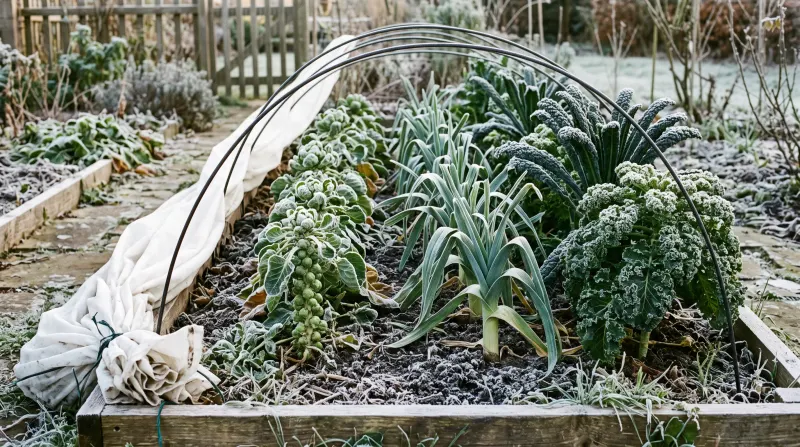
A good winter garden checklist comes down to four jobs: water and protect woody plants before the ground freezes, put winter mulch on after it freezes, keep salt, snow and rodents in check through the cold months, and undo the protection in early spring. Timing follows your ground, not the calendar, so watch for the first hard freeze where you live.
The list below is for the northern hemisphere, from late November to March. It sits alongside the other seasonal lists in our seasonal garden jobs section.
Why it matters now: in much of the US and Canada, the ground will freeze within weeks. A few jobs, such as deep-watering evergreens and fitting trunk guards, only work if you do them before that happens.
Before the ground freezes
Trees, shrubs and evergreens
- Deep-water evergreens in dry spells. Iowa State Extension advises watering evergreens that are prone to winter drying during dry fall periods and continuing until the ground freezes. Frozen soil cuts off their water while their needles keep losing it. Newly planted trees need this care for their first two to five years.
- Fit trunk guards against rodents. Wrap the trunks of young trees with 1/4-inch (6 mm) mesh hardware cloth, as University of Wisconsin Extension recommends against rodent damage, or use the white corrugated or spiral guards Iowa State suggests.
- Fence rabbits out of shrubs. Iowa State suggests chicken wire or hardware cloth 24 to 36 inches (60 to 90 cm) tall, with the bottom pinned to the soil so rabbits can't crawl under.
- Wrap thin-barked trunks against sunscald. Use tree wrap or plastic guards in fall, and take them off in spring.
- Tie up multi-stemmed evergreens. Wrap arborvitae and similar shrubs loosely with twine or rope so heavy snow doesn't split them open.
- Put up windbreaks where needed. For burlap screens around exposed evergreens, set the screen at least 6 inches (15 cm) from the foliage.
Hoses, tools and machines
- Disconnect and drain every hose. University of Illinois Extension points out that a frost-free spigot is not frost-free if a connected hose traps water in it. Store hoses indoors if you can.
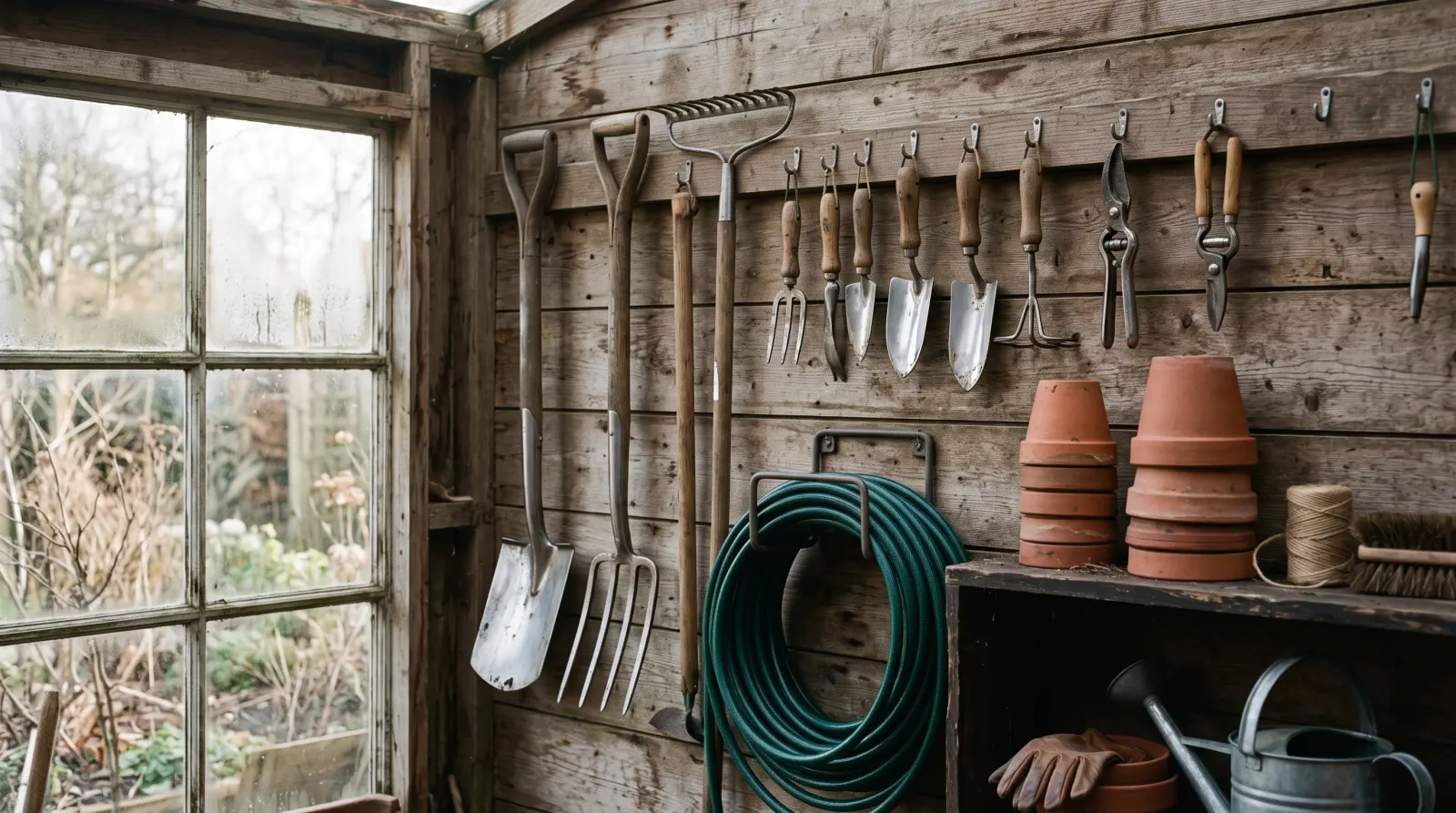
- Clean, sharpen and oil hand tools. Scrub off dried soil with a rough rag or wire brush, sharpen shovels, spades and hoes, then wipe the metal with a light coat of oil to stop rust.
- Put the mower to bed. Run 2- or 4-cycle engines dry, or fill the tank with fresh gasoline and add fuel stabilizer. Clean the deck and sharpen or replace the blade while you're there.
- Look after batteries. Keep cordless tool and mower batteries charged over the off-season, following the owner's manual for how often.
Beds and borders
- Gather mulch now, apply it later. Stockpile straw, shredded leaves, pine needles or evergreen boughs so you are ready when the ground freezes.
- Spread compost on empty vegetable beds. The RHS suggests this for December to enrich the soil over winter.
- Clean and store bamboo canes. Keep them dry, and shorten broken or rotted ones.
- Decide what stays in the vegetable bed. Hardy roots and leeks can stay in the ground under mulch in many areas; harvest or cover tender crops before the hard freeze.
Once the ground has frozen
Winter mulch is not there to keep plants warm. It keeps frozen soil frozen, so plants aren't heaved out of the ground by repeated freezing and thawing.
University of Wisconsin Extension suggests applying winter mulch close to Thanksgiving weekend or just before the first snow, whichever comes first. Its depths:
| Plant | Winter mulch depth | Notes |
|---|---|---|
| Herbaceous perennials and ornamental grasses | 6 to 8 in (15 to 20 cm) around the crown | Straw, shredded leaves or pine needles |
| Strawberries | 2 to 4 in (5 to 10 cm) | Straw, marsh hay or sudan grass |
| Young or marginally hardy shrubs and fruit trees (planted within 5 years) | About 6 in (15 cm) | Wood chips |
| Hybrid tea roses | Mound 8 to 10 in (20 to 25 cm) of soil, then 12 in (30 cm) of leaves or straw | Wait until it has dropped below 20°F (-7°C) for at least a couple of nights |
A straw layer should be at least 3 inches (7.5 cm) deep to do any good.
Through the winter (December to February)
- Brush snow off small trees and shrubs. Shake gently, or sweep upward with a broom, as Iowa State suggests.
- Use deicing salt carefully. Clear as much snow and ice as possible first, and wait until precipitation stops before salting. Mix salt with sand or kitty litter, and don't pile salty snow onto beds or around trees and shrubs.
- Check fences and guards after heavy snow. Deep snow lets rabbits reach over guards they couldn't reach in fall. Shovel some snow away if needed.
- Prune apples and pears while dormant. The RHS lists winter as the time to prune apples, pears, quinces and medlars. Don't prune stone fruit such as plums and cherries in winter.
- Plant new trees and shrubs in mild spells. The RHS says only when the ground is neither frozen nor waterlogged.
- Harvest hardy crops. In milder areas, the RHS lists leeks, parsnips, Brussels sprouts, cabbages, swedes, turnips, beetroot and celery for December. Stake or earth up tall Brussels sprouts against wind rock.
- Check stored produce. Remove any rotten fruit or vegetables before rot spreads.
- Plan the coming season. Winter is the quiet time to review what worked, sketch a crop rotation and order seeds early.
Late winter and early spring
- Flush salt from soil. As soon as the ground thaws, Iowa State advises watering heavily wherever salt built up, to wash it out of the root zone.
- Take off wraps, twine and sunscald guards. Iowa State advises removing winter coverings in spring.
- Pull back winter mulch gradually. Around trees, Wisconsin Extension suggests reducing mulch to 2 to 3 inches (5 to 7.5 cm) by mid to late spring and keeping it 6 inches (15 cm) away from the trunk.
Adjusting the checklist for your climate
- Cold zones (roughly USDA 3 to 5): the ground freezes early and stays frozen. Do the before-freeze jobs in October or early November, and expect snow to be your best insulator.
- Middle zones (6 and 7): freeze and thaw cycles are common, so winter mulch and frost-heave protection matter most.
- Mild zones (8 and up) and much of the UK: the ground may never freeze hard. Focus on drainage, wind protection and keeping winter crops growing, and skip heavy winter mulching.
Next step: if you still have crops in the ground, read our guide to overwintering vegetables to decide what to mulch, cover or harvest before the hard freeze.
Frequently asked questions
When should I put winter mulch on perennials?
After the ground starts to freeze, not before. University of Wisconsin Extension suggests close to Thanksgiving weekend or just before the first snow, whichever comes first, with 6 to 8 inches of loose mulch around the crowns of perennials and ornamental grasses.
Should I water plants in winter?
Water evergreens deeply during dry spells in fall and keep going until the ground freezes, as Iowa State Extension advises. Once the soil is frozen, roots can't take up water, so stop until it thaws.
Do I need to drain my garden hose for winter?
Yes. Disconnect the hose from the house, drain it and store it indoors if you can. University of Illinois Extension notes that a frost-free spigot is not frost-free if a connected hose traps water in it.
How do I protect young trees from rabbits and voles in winter?
Wrap the lower trunk with 1/4-inch hardware cloth or use white plastic tree guards, and fence small shrubs with chicken wire or hardware cloth 24 to 36 inches tall, pinned to the ground. Check the height after heavy snow.
What can I harvest from the garden in winter?
In milder areas, the RHS lists leeks, parsnips, Brussels sprouts, cabbages, swedes, turnips, beetroot and celery for December. In colder zones, hardy crops need mulch or covers to keep producing.
Sources
- Iowa State University Extension, Protecting Trees and Shrubs in Winter
- University of Wisconsin Extension, Kenosha County, Winter Mulch Your Landscape Plants (2020)
- University of Illinois Extension, Over the Garden Fence: Yard Equipment Maintenance Tips (2018)
- Royal Horticultural Society, Jobs to Do in December