Calendar
What to Sow in November in the UK: Broad Beans, Garlic, Sweet Peas and Fruit
 By Petr Hess · Updated November 4, 2026 · 7 min read
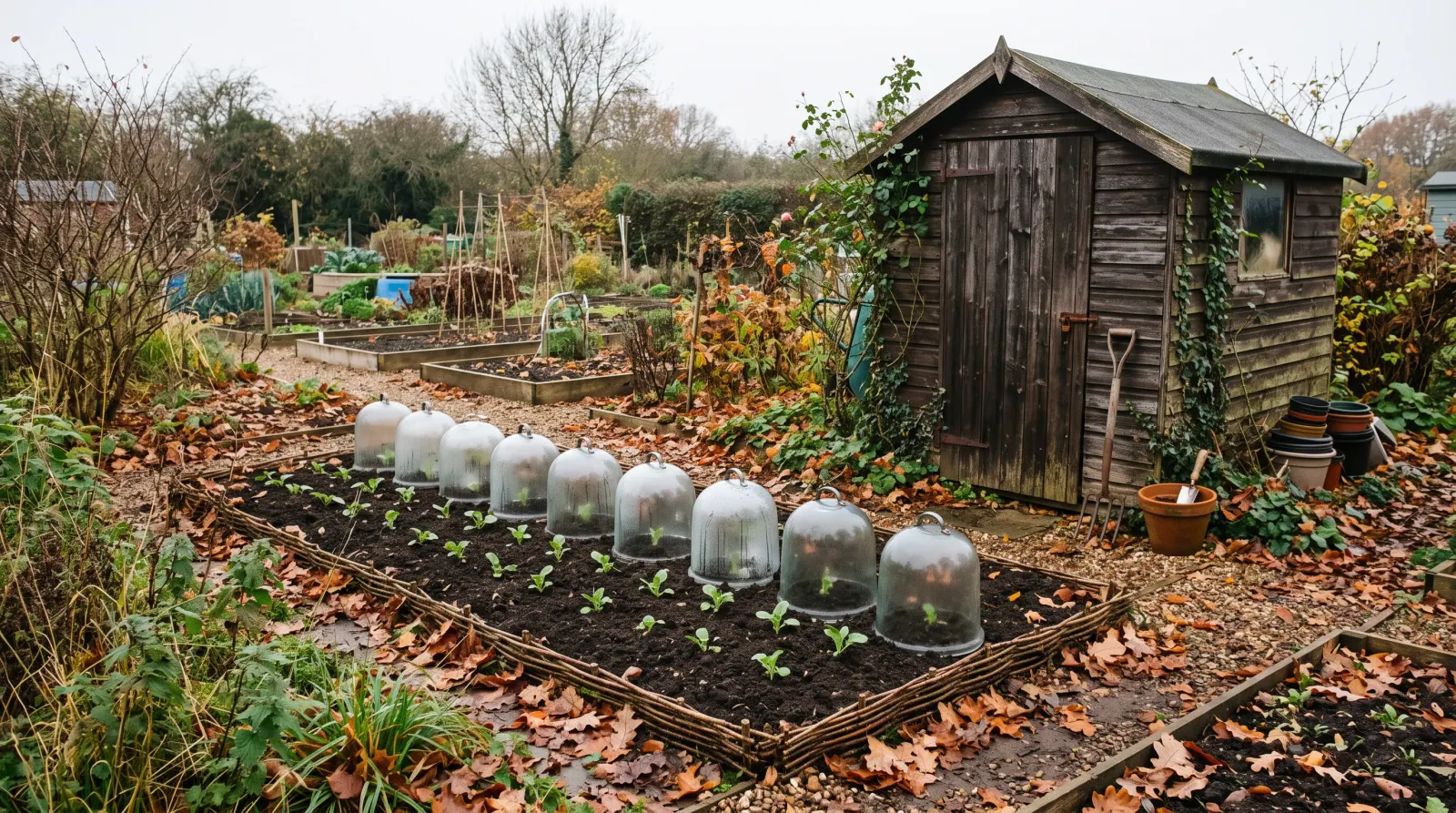
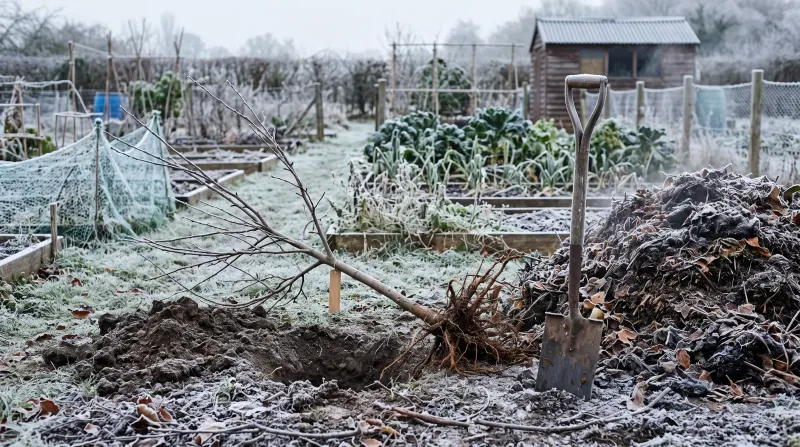
Here is what to sow in November in the UK. You can sow overwintering broad beans, plant garlic, sow sweet peas in pots and plant bare-root fruit trees, bushes and raspberry canes. In mild, free-draining gardens much of this can go straight into the ground. In cold or wet gardens, start broad beans and garlic in pots or modules under cover and plant them out in spring.
This page belongs to our UK planting calendar. The main source is the Royal Horticultural Society (RHS), which splits much of its November advice into "mild areas" and "cold areas" rather than giving fixed frost dates. Conditions differ widely between a sheltered southern garden and an exposed northern or upland one, so read every date as a guide for your microclimate.
Why now: in many gardens the soil is still workable in early November, and garlic needs its winter chill to form good bulbs. Once the ground is frozen or waterlogged, the RHS advises against planting at all.
At a glance: the UK in November
- Sow under cover: sweet peas in pots; broad beans in pots in an unheated greenhouse (cold areas); garlic in modules in a cold frame.
- Sow or plant outside: overwintering broad beans and garlic (mild, well-drained areas); autumn onion sets on soil that does not waterlog; fruit trees, fruit bushes and raspberry canes.
- Force: chicory roots for winter chicons.
- Harvest: parsnips, leeks, carrots, lettuce, spinach and chicons.
- Key jobs: net brassicas against pigeons, guard sowings from mice, prune apples and pears, cover empty beds, order seeds.
Sow indoors or under cover
Sweet peas
The RHS gives October to November as one of two sowing windows for annual sweet peas. Autumn sowings flower earlier than spring ones.
- Sow one seed per 9cm (3½in) pot or root trainer, or 5 to 7 seeds in a 13cm (5in) pot, about 1cm (½in) deep in peat-free seed compost.
- Keep pots at around 15°C (59°F) to germinate.
- Move seedlings to a cold frame or cold greenhouse for the winter so they do not grow leggy. Keep the frame lid open unless a heavy frost is forecast.
- Plant out in April. Autumn-sown plants often branch naturally, so they may not need pinching out.
Broad beans in pots (cold areas)
Where winters are harsh or soil is heavy, the RHS suggests sowing overwintering broad beans in pots of peat-free compost in an unheated greenhouse. Plant them out once the soil is workable in spring.
Garlic in modules
If your soil stays wet over winter, the RHS recommends starting garlic in modules: one clove per cell with the tip covered by about 2.5cm (1in) of compost. Keep them somewhere cool and sheltered, such as a well-ventilated cold frame, with the compost just moist. Plant out 15cm (6in) apart in spring.
Forcing chicory
Dig up chicory roots, cut the leaves back to about 2.5cm (1in) above the crown, pot them up and keep them somewhere dark and warm. The RHS says chicons appear in three to six weeks.
Sow or plant outdoors
Overwintering broad beans
In mild areas with well-drained soil, sow overwintering broad beans outside or under cloches. The RHS names 'Aquadulce' as notably hardy for November sowing. Avoid autumn sowing on windy or waterlogged sites. If that describes your plot, the RHS suggests sowing a fast variety such as 'Monica' in pots indoors in February, which matures barely later than autumn-sown beans.
Garlic
Garlic is usually planted from mid-autumn to early winter because most varieties need one to two months at 0 to 10°C (32 to 50°F) to form a good bulb, according to the RHS. Plant outdoors only where soil is free-draining and rainfall is low; elsewhere use modules.
| Garlic detail | RHS guidance |
|---|---|
| Spacing | 15cm (6in) apart in rows 30cm (1ft) apart |
| Depth | Pointed end up, tip about 2.5cm (1in) below the surface; shallower on heavy soil |
| Site | Sunny, free-draining; wet soil raises disease risk |
| Harvest | Autumn-planted: late spring to early summer, when leaves yellow |
| Types | Hardneck: larger cloves, stores 4 to 6 months. Softneck: stores up to a year, rarely bolts |
Autumn onion sets
Overwintering (often called Japanese) onion sets are planted in autumn for a harvest in June and July, and the RHS says they tolerate cold better and are less likely to bolt. Plant sets 2cm deep with the tip just showing, 10 to 15cm apart in rows 20 to 30cm apart. Do not plant them in heavy soil that waterlogs in winter, where sets may rot. Start them in modules and transplant in spring instead.
Fruit trees, bushes and canes
November is a good month to buy and plant new fruit trees and bushes, and the RHS Schools calendar adds raspberry canes. Plant only when the ground is neither frozen nor waterlogged. If you plan a new asparagus bed, the RHS suggests preparing it now for spring planting.
Harvest
- Parsnips: the RHS says they taste better after frost. Leave them in the ground until needed, or lift some and bury them in a shallow trench so you can reach them in a cold snap.
- Leeks, carrots, lettuce and spinach: all listed for November harvest in the RHS Schools calendar.
- Celeriac: if you leave it in the ground, cover it with a thick mulch of straw or bracken.
- Stored apples: eat any with bitter pit first, cutting out the affected parts, and remove rotting fruit from store.
For crops you want to keep in the ground until spring, our guide to overwintering vegetables covers protection in more detail.
Garden jobs
- Guard against mice. Protect new sowings and crops still in the ground, ideally with physical barriers.
- Keep pigeons off brassicas with cloches, reused netting or fleece.
- Remove yellowing leaves from Brussels sprouts and other brassicas to reduce grey mould and downy mildew.
- Stake tall sprouts so wind rock does not loosen their roots.
- Prune apples, pears, quinces and medlars. Thin congested spurs on trained trees, tie in new tiers on espaliers and cut out any canker.
- Cut autumn-fruiting raspberry canes to ground level (RHS Schools).
- Cover empty beds with a double layer of cardboard, tape and staples removed, topped with homemade compost.
- Collect leaves for leaf compost (RHS Schools), and clean bamboo canes before storing them dry.
- Order seeds for next year while you have time. December's jobs follow on in our UK December calendar.
All jobs above are from the RHS Grow Your Own November list unless marked otherwise.
Project of the month: keep your greenhouse frost-free
Many of this month's sowings, from sweet peas to broad beans in pots, rely on a cold frame or unheated greenhouse. Unheated is fine for those hardy crops, but any tender plants you overwinter need a space kept above freezing, and an unheated greenhouse offers no guarantee of that on a clear, frosty night. Before the first hard frost, decide if you need a heater, how you will measure the temperature, and how you will ventilate on bright days. Our greenhouse heating and ventilation guide is the place to start.
Frequently asked questions
What can I sow outside in November in the UK?
In mild areas with well-drained soil, the RHS suggests sowing overwintering broad beans outside or under cloches, and planting garlic cloves in their final position where soil is free-draining and rainfall is low. In colder or wetter gardens, start both in pots or modules in a cold frame or unheated greenhouse.
Is November too late to plant garlic in the UK?
No. The RHS says garlic is usually planted from mid-autumn to early winter because most varieties need one to two months at 0 to 10°C to form a good bulb. On heavy, wet soil, start cloves in modules in a cold frame and plant them out in spring.
Which broad bean is best for November sowing?
The RHS names 'Aquadulce' as notably hardy for November sowing. If your plot is too windy or wet for autumn sowing, it suggests waiting and starting a quick variety such as 'Monica' in pots indoors in February.
Can I still sow sweet peas in November?
Yes. The RHS gives October to November as one of two sowing windows for annual sweet peas. Sow in 9cm pots of peat-free compost at about 15°C, then keep seedlings in a cold frame or cold greenhouse over winter and plant out in April.