Calendar
What to Sow in December in the UK: Microgreens, Garlic, Shallots and Bare-Root Fruit
 By Petr Hess · Updated November 4, 2026 · 7 min read
Here is what to sow in December in the UK. You can sow cress, microgreens and mustard indoors, plant garlic and shallots outside in mild, well-drained gardens, and plant bare-root fruit trees, fruit bushes, hedging and roses whenever the ground is neither frozen nor waterlogged. Very little else is sown outdoors this month. December is mainly for harvesting winter crops, protecting brassicas and planning next year.
This page is part of our UK planting calendar, and it draws on the Royal Horticultural Society (RHS) December advice. The RHS separates mild and cold areas rather than giving one national date, so check conditions in your own garden before planting, especially on heavy clay or in frost pockets.
Why now: bare-root planting season is under way while plants are dormant. A few hours of planning in December saves a rushed spring.
At a glance: the UK in December
- Sow indoors: cress, microgreens and mustard on a windowsill.
- Plant outdoors: garlic and shallots (mild areas, well-drained soil); fruit trees and bushes; bare-root deciduous hedging, trees and roses.
- Harvest: beetroot, turnips, parsnips, Brussels sprouts, celery, swedes, cabbages, leeks, chard and lettuce.
- Protect: brassicas from pigeons, stored root crops from hard frost, new trees from rabbits.
- Prune: apples, pears, quinces and medlars. Leave stone fruit alone in winter.
- Plan: order seeds and work out next season's first sowings.
Sow indoors
Cress, microgreens and mustard
The RHS Schools calendar lists cress, microgreens and mustard as December indoor sowings. Sow thickly on damp compost or kitchen paper in a shallow tray, keep them on a bright windowsill and snip with scissors when the first leaves open. Low winter light makes seedlings stretch, so turn trays daily.
Onion seed: wait for the new year
The RHS onion guide gives indoor sowing from mid-winter to early spring. Sow about 1.3cm (½in) deep in modular trays of peat-free seed compost, and germinate in a heated propagator or on a warm, sunny windowsill. Late December sits at the very start of that window, so there is no need to rush before January.
Under cover
Broad beans and sweet peas sown in pots in October or November should now be in a cold frame or unheated greenhouse. Keep them cool and ventilated so they stay short and sturdy. If you missed the November sowing, see our UK November calendar for the details and alternatives.
Sow or plant outdoors
Garlic and shallots
The RHS lists planting garlic and shallots in mild areas with well-drained soil as a December job. Its garlic guide explains why: most varieties need one to two months at 0 to 10°C (32 to 50°F) to form a good bulb, so a December planting still gets enough cold.
- Space cloves 15cm (6in) apart in rows 30cm (1ft) apart, pointed end up, tip about 2.5cm (1in) below the surface.
- Choose a sunny, free-draining spot. Wet soil raises the risk of disease in autumn and winter plantings.
- On heavy or waterlogged soil, start cloves in modules in a cold frame or unheated greenhouse and plant out in spring.
- Autumn and winter plantings are usually ready from late spring to early summer, when the leaves turn yellow.
Fruit trees and bushes
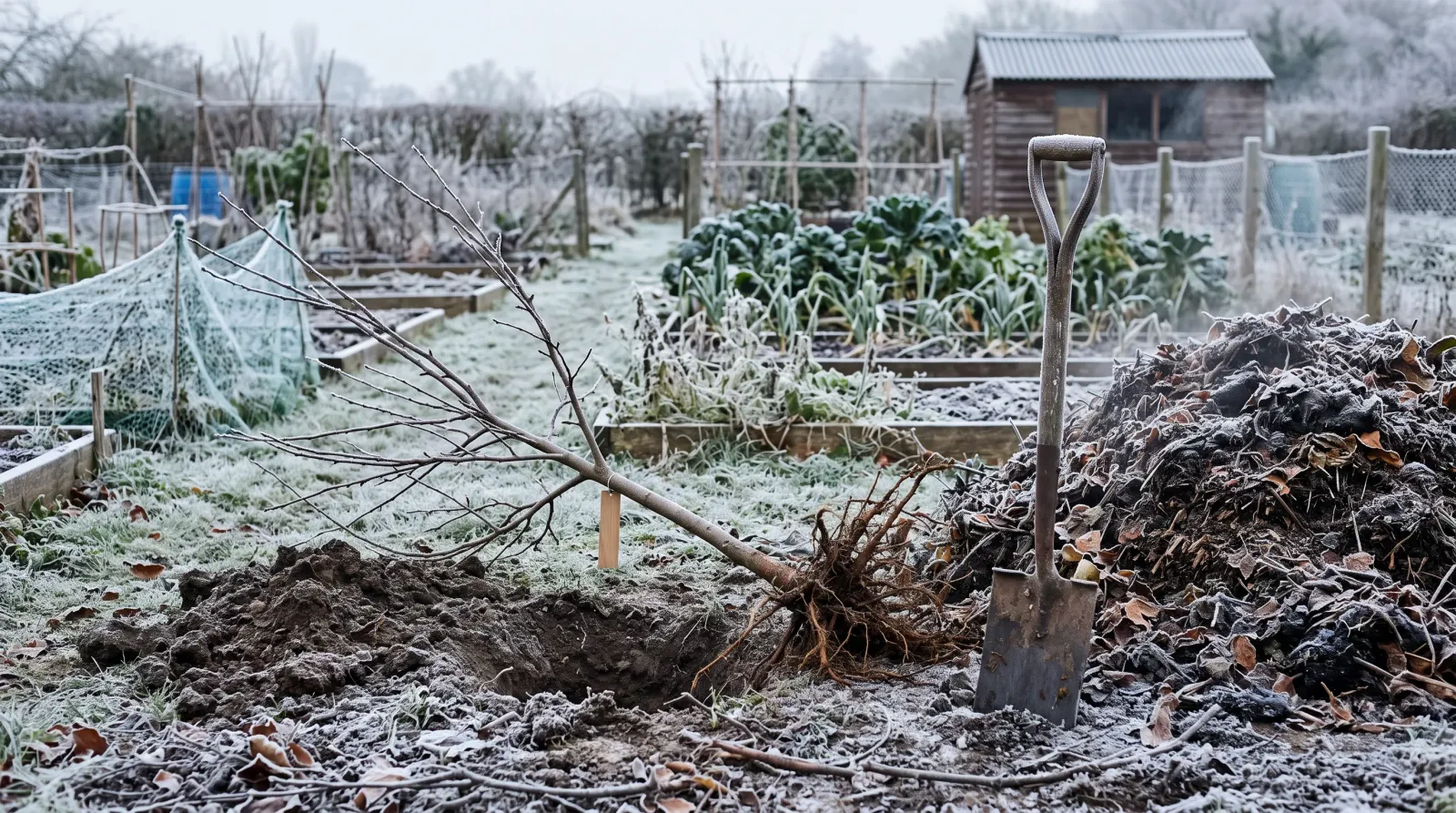
The RHS lists planting new fruit trees and bushes as a December job, as long as the ground is not waterlogged or frozen.
Bare-root hedging, trees and roses
The RHS December trees and shrubs advice is to keep planting bare-root deciduous hedging and trees. Roses also establish well bare-root, but avoid planting them where roses grew before, because of replant disease. Fit biodegradable guards around newly planted trees to protect them from rabbits, deer and squirrels.
Harvest
| Crop | Notes |
|---|---|
| Parsnips, swedes, turnips, beetroot | Lift as needed. Before hard frost, cover trenches of stored roots with cardboard so you can still dig them (RHS). |
| Leeks | Lift as needed through winter. |
| Brussels sprouts | Strip yellow leaves to reduce grey mould (RHS). |
| Winter cabbages | Keep netted against pigeons (RHS). |
| Celery | Listed as ready in December (RHS). |
| Chard and lettuce | Listed for December by RHS Schools; cover lettuce in hard frost. |
Harvest list from the RHS December Grow Your Own page and the RHS Schools calendar.
Garden jobs
- Prune apples, pears, quinces and medlars. Thin crowded spurs on restricted trees and tie in new tiers on espaliers. Do not prune plums, cherries or other stone fruit in winter.
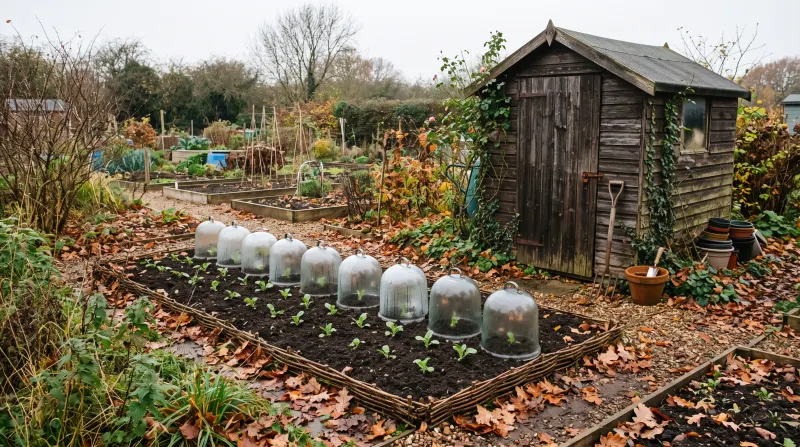
- Protect brassicas from pigeons with cloches, reused netting or biodegradable or reused fleece.
- Strip yellowed leaves from Brussels sprouts and other brassicas to reduce grey mould and downy mildew.
- Stake or earth up leggy sprouts so wind does not rock them loose.
- Remove rotten fruit from store.
- Spread homemade compost on empty vegetable beds.
- Clean bamboo canes and store them dry. Shorten broken or rotten ones so you can reuse them.
- Re-firm frost-lifted plants. Cold winds and frost loosen new roots. Add a temporary netting windbreak if there is no shelter, and mulch with straw or composted bark (RHS trees and shrubs).
- Brush snow off conifers, climbers and light-limbed shrubs before it splays or breaks branches.
- Take hardwood cuttings of shrubs such as Berberis, buddleia and willow.
- Hold off pruning evergreens and Prunus until spring, and hydrangeas until March.
For tools, water butts and beds before the coldest weeks, see our winter garden checklist.
Plan for the new year
Cold December days suit browsing seed catalogues and nursery lists. Use them to put dates against next season's first jobs:
- Onion seed: sow indoors from mid-winter in modules; space module-raised seedlings 10cm (4in) apart, or 15cm (6in) for large onions, in rows 25 to 30cm apart when you plant out (RHS).
- Spring onion sets: plant in early to mid-spring, 2cm deep and 10 to 15cm apart, for a harvest from July to September (RHS).
- Spring garlic: some varieties suit planting in late winter or early spring, ready from mid-summer to early autumn. Check the packet before you buy (RHS).
- Broad beans: if autumn sowing was not possible on your plot, the RHS suggests a quick variety such as 'Monica' started in pots indoors in February.
- Garlic type: hardneck garlic has fewer, larger cloves and stores four to six months; softneck stores up to a year and rarely bolts. Choose by how long you want to keep your crop.
Project of the month: an indoor salad garden for winter
December's microgreens and cress show how much you can grow on a windowsill, but short days limit both yield and choice. If you want a steadier supply of herbs and salad leaves through to spring, an indoor garden with its own grow light gives plants the light a December windowsill cannot. Our indoor gardens guide is the place to start.
Frequently asked questions
Can you sow anything in December in the UK?
Yes, mostly indoors. The RHS Schools calendar lists cress, microgreens and mustard to sow indoors in December. Outdoors, the RHS suggests planting garlic and shallots in mild areas with well-drained soil, along with fruit trees and bushes when the ground is not frozen or waterlogged.
Is December too late to plant garlic in the UK?
Not in mild, well-drained gardens. The RHS lists planting garlic and shallots in mild areas as a December job, and its garlic guide gives a window of mid-autumn to early winter. On cold, wet soil, start cloves in modules in a cold frame and plant out in spring.
Can I sow onion seed in December?
The RHS onion guide puts indoor sowing from mid-winter to early spring, in modules in a heated propagator or on a warm windowsill. Late December is at the very start of that window, so there is no loss in waiting for the new year.
What can I harvest in December in the UK?
The RHS lists beetroot, turnips, parsnips, Brussels sprouts, celery, swedes, cabbages and leeks as ready in December, and the RHS Schools calendar adds chard and lettuce.