Buyer's guide
Best Portable Power Stations for the Garden, Shed, Cabin and Home Backup
 By Petr Hess · Updated November 4, 2026 · 10 min read
We research products from manufacturer specs, independent tests and owner feedback; we have not tested them ourselves. Some links may earn us a commission at no extra cost to you. How we research.
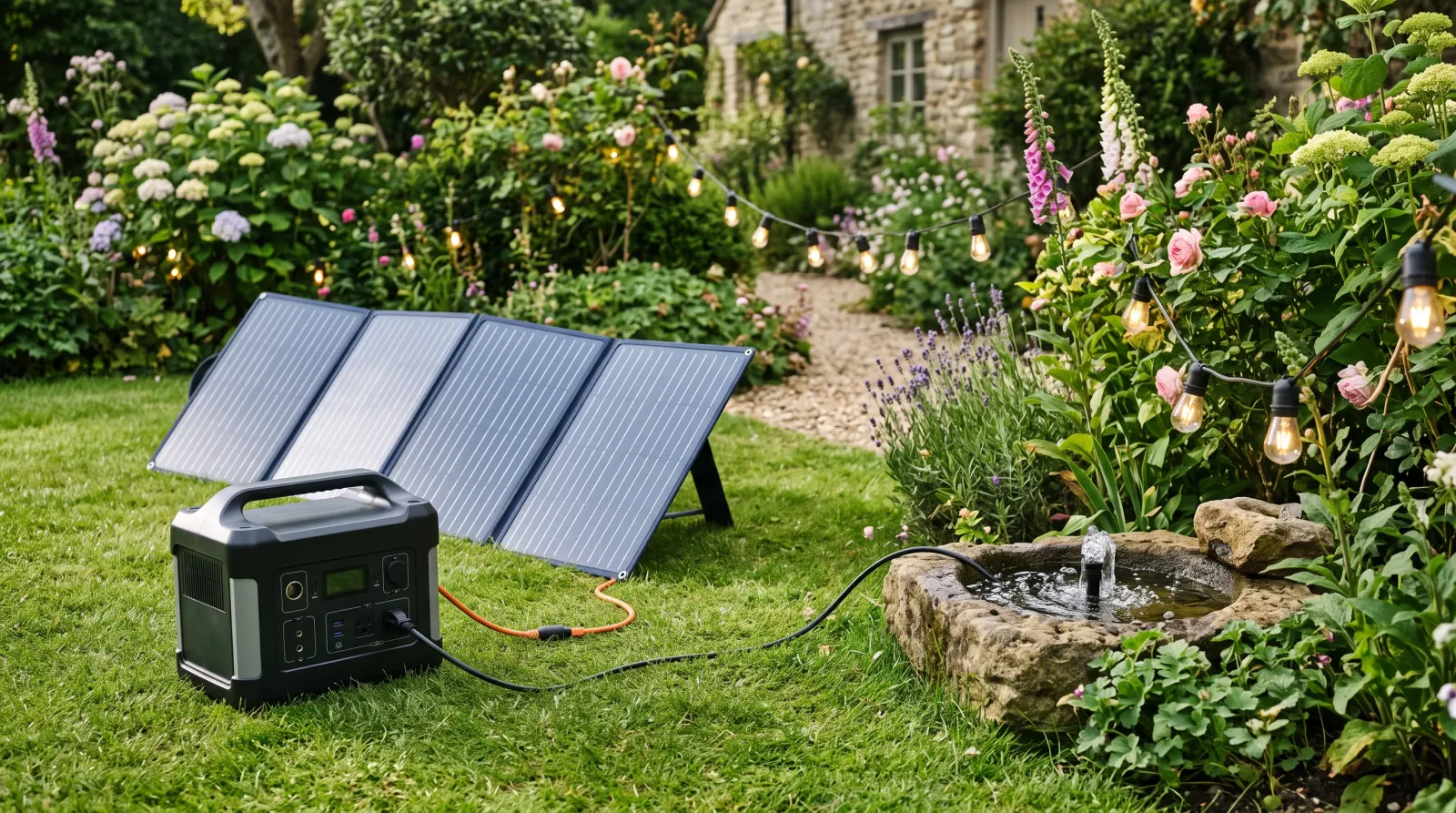
The best portable power stations for most homes and gardens hold about 1 to 2 kWh, use a LiFePO4 battery, deliver 1,800 to 2,600 W from the inverter and take solar input. That covers a shed's lights and tools, a weekend at a cabin, or a fridge and router through a short power cut. For longer outages or 240V appliances, step up to an expandable 3 to 4 kWh unit that connects to your home panel.
November is the month to sort this out. Winter storms bring the outages, sheds and cabins lose daylight for solar, and Black Friday is weeks away, so it pays to know your numbers before the prices start moving.
This guide is built from manufacturer spec pages and one published independent test. Plot & Season did not test these units. For the basics of how a power station works, start with our guide to portable power stations.
Our research picks
- Best overallAnker SOLIX C1000 Gen 21,024 Wh, 2,000 W continuous (3,000 W peak), 600 W solar input, 10 ms UPS, 24.9 lbView at Anker SOLIX
- Best for sheds and cabinsBLUETTI Elite 200 V22,073.6 Wh LiFePO4, 2,600 W continuous, 1,000 W solar input, 53.4 lb, 5-year warrantyView at BLUETTI
- Best for home backupEcoFlow DELTA Pro 34 kWh with 4,000 W from a single unit, system expandable to 48 kWhView at EcoFlow
Portable power stations compared
| Model | Best for | Key specs | Main drawback |
|---|---|---|---|
| Anker SOLIX C1000 Gen 2 | Garden tools, short outages | 1,024 Wh; 2,000 W (3,000 W peak); 600 W solar; 10 ms UPS; 24.9 lb (11.3 kg) | Loud fan; not expandable |
| EcoFlow DELTA 3 Plus | Home office UPS, growing later | 1,024 Wh, expandable to 5 kWh; 1,800 W (3,600 W surge); 1,000 W solar; under 10 ms UPS | Lower inverter rating than the Anker |
| BLUETTI Elite 200 V2 | Sheds and weekend cabins | 2,073.6 Wh LiFePO4; 2,600 W; 1,000 W solar; 53.4 lb (24.2 kg) | UPS time and expansion not stated |
| Jackery Explorer 2000 v2 | Quiet cabin runtime | 2,042 Wh; 2,200 W (4,400 W surge); 400 W solar; about 39 lb (17.7 kg) | Low solar ceiling; no expansion |
| EcoFlow DELTA Pro 3 | Home backup, 240V loads | 4,096 Wh; 4,000 W; 240V outlet; 2,600 W solar; system expands to 48 kWh | 114.1 lb (51.8 kg); expensive |
| BLUETTI Apex 300 | Panel-wired whole-home systems | 2,764.8 Wh LiFePO4; 3,840 W; 120V and 240V; up to 58 kWh with multiple units | Solar needs an add-on; ships late November |
How to choose a portable power station
Capacity: kWh and Wh
Capacity is stored energy, quoted in watt-hours (Wh) or kilowatt-hours (kWh, 1,000 Wh). A device that draws 100 W for 10 hours uses 1,000 Wh. To size a unit, list each device, multiply its watts by the hours you need it, and add the results.
Then knock off a margin. The inverter that turns battery power into 120V AC wastes some energy as heat. Outdoor Gear Lab measured usable AC output at 60 to 93 percent of claimed capacity across the units it tested. It measured 890 Wh from the 1,024 Wh Anker SOLIX C1000 Gen 2 (87 percent) and 3,790 Wh from the 4,096 Wh EcoFlow DELTA Pro 3 (93 percent).
Inverter watts and surge
The continuous AC rating is the most power the unit can supply at once. Surge (or peak) is a brief higher figure that helps motors start, such as a fridge compressor, pump or circular saw. Match continuous watts to everything running together. Outdoor Gear Lab gives a 1,500 W space heater or kettle and an 1,800 W induction burner as typical high loads, and suggests at least 2,000 Wh and 2,000 AC watts for cooking.
A rough sense of scale: a 1,500 W heater would drain 890 usable Wh in about 35 minutes. Battery power is poor at making heat. For a frost-free greenhouse or shed, insulation and a thermostat-controlled low-watt heater do far more than a bigger battery.
Solar input
Solar input is the maximum panel power the station's charge controller accepts, in watts, along with a voltage limit. Exceeding the voltage can damage the unit, so check both numbers. Outdoor Gear Lab's rule of thumb is one 200 W panel for a 1,000 to 2,000 Wh station, assuming 4 to 6 peak sun hours and about 80 percent charging efficiency. That works out to roughly 640 to 960 Wh a day from one panel in good sun. Expect much less in a northern December.
UPS mode
UPS (uninterruptible power supply) mode lets the station pass wall power through to your devices and switch to battery when the grid drops. The switchover time is in milliseconds (ms). Anker lists 10 ms for the C1000 Gen 2 and EcoFlow lists under 10 ms for the DELTA 3 Plus. If you plan to protect a desktop computer or network gear, check the switchover time against what that equipment tolerates.
Chemistry and cycle life
Most current units use LiFePO4 (lithium iron phosphate) cells. A cycle is one full discharge and recharge. Anker rates the C1000 Gen 2 for 4,000 cycles to at least 80 percent capacity, and Bluetti rates the Apex 300 for up to 6,000 cycles at 80 percent. If you only use a unit for a few outages a year, cycle life matters less than warranty and support.
Expansion and home connection
Some units accept extra battery packs, and the larger ones can feed selected home circuits through a transfer switch or the maker's panel. That is the difference between running a lamp and running your well pump. If backup is your main goal, budget for the panel and the electrician from the start.
Price tiers
- Budget: 300 to 600 Wh units for phones, lights and a laptop.
- Mid-range: 1 to 2 kWh LiFePO4 units with 1,800 to 2,600 W inverters. The right tier for most garden and shed use.
- Premium: 3 kWh and up, 240V output, expansion batteries and home panel integration.
The best portable power stations
Anker SOLIX C1000 Gen 2: best overall
Anker lists the C1000 Gen 2 at 1,024 Wh with 2,000 W continuous and 3,000 W peak output, 600 W of solar input (60 V maximum), a 10 ms UPS switchover and 10 ports. With UltraFast charging switched on in the app, Anker says it reaches 100 percent in 49 minutes at 1,600 W. It weighs 24.9 lb (11.3 kg) and is rated for 4,000 cycles. Outdoor Gear Lab named it its Best Buy for most people, praising the fast charging and power-to-weight ratio. Its testers flagged a noisy fan and advised against overnight CPAP use.
- Verdict: the strongest all-round mid-size unit, with a 2,000 W inverter that handles most garden power tools.
- Best for: hedge trimmers, a pressure washer top-up, shed lighting and short outages.
- Main drawback: no expansion battery, so 1 kWh is your ceiling.
- Skip it if: you need it running next to a bed or desk all night; the fan noise was the main complaint.
EcoFlow DELTA 3 Plus: best for UPS and room to grow
EcoFlow lists the DELTA 3 Plus at 1,024 Wh, expandable to 5 kWh with extra batteries. It delivers 1,800 W continuous, 2,200 W in its X-Boost mode and 3,600 W surge. Solar input is 1,000 W through two 500 W MPPT inputs (MPPT is a charge controller that squeezes the most out of panels). AC charging takes 56 minutes from empty to full at 1,500 W, the UPS switchover is under 10 ms and the warranty is 5 years.
- Verdict: a 1 kWh unit you can grow into a 5 kWh system later.
- Best for: keeping a router, computer and a few lights alive, then adding capacity.
- Main drawback: 1,800 W continuous is lower than the Anker's 2,000 W.
- Skip it if: you will never buy an extra battery; the Anker gives more inverter for the size.
BLUETTI Elite 200 V2: best for sheds and cabins
Bluetti lists the Elite 200 V2 at 2,073.6 Wh with automotive-grade LiFePO4 cells and 2,600 W of continuous 120V output. A 3,900 W "power lifting" mode is for pure resistive loads such as heaters and kettles. It takes 1,000 W of solar (12 to 60 V, 20 A maximum), charges fully from the wall in 1.4 hours, weighs 53.4 lb (24.2 kg) and carries a 5-year warranty. The product page does not state a UPS switchover time or whether it accepts expansion batteries.
- Verdict: twice the capacity of the 1 kWh units with a strong inverter and generous solar input.
- Best for: an off-grid shed, garden office or weekend cabin with a couple of panels on the roof.
- Main drawback: at 53.4 lb it is a two-handed carry.
- Skip it if: you need a confirmed UPS rating for computers; check with Bluetti first.
Jackery Explorer 2000 v2: best for quiet cabin runtime
Outdoor Gear Lab lists the Explorer 2000 v2 at 2,042 Wh, named it its Editors' Choice for off-grid camping and measured 1,710 Wh of usable AC output (84 percent). Its testers list 2,200 W continuous, 4,400 W surge, a 2.5-hour AC charge and quiet operation. The unit weighs about 39 lb (17.7 kg), which is light for 2 kWh. The limits are a 400 W solar ceiling, three AC outlets and no expansion option. Non-Jackery panels need an adapter.
- Verdict: long runtime in a carryable box that stays quiet at night.
- Best for: cabins and weekends away where you recharge mostly from the wall.
- Main drawback: 400 W of solar input is slow to refill 2 kWh on short winter days.
- Skip it if: solar is your main charging source; the Bluetti takes 1,000 W.
EcoFlow DELTA Pro 3: best for home backup
Outdoor Gear Lab lists the DELTA Pro 3 at 4,096 Wh with up to 4,000 W of AC output, expandable to 48 kWh, and made it its Top Pick for home backup. It measured 3,790 Wh of usable output from the 4,096 Wh battery (93 percent, the best in its test) and a 3.2-hour full AC charge. Its testers list a 240V outlet, up to 2,600 W of solar input, seven AC outlets and an 8,000 W surge rating. The cost is weight: 114.1 lb (51.8 kg), so plan to roll it, not carry it.
- Verdict: the most capable single-box backup in this guide, with 240V for a well pump or other large loads.
- Best for: winter outages where you want the fridge, furnace blower and lights on essential circuits.
- Main drawback: price and bulk.
- Skip it if: you only need a few hours of lights and Wi-Fi; a 1 to 2 kWh unit does that for far less.
BLUETTI Apex 300: best for panel-wired whole-home systems
Bluetti lists the Apex 300 at 2,764.8 Wh with LiFePO4 cells rated for up to 6,000 cycles at 80 percent capacity. It supplies 3,840 W continuous at 120V and 240V at the same time. Linked units and batteries scale to 11.52 kW of output and 58 kWh of capacity, and it works with Bluetti's AT1 panel for essential-circuit or whole-home backup. Bluetti lists a UPS switchover of 0 or 20 ms. Solar charging runs through the SolarX 4K add-on, and the page said units ship from November 20.
- Verdict: a building block for a serious home battery system rather than a grab-and-go unit.
- Best for: homes planning a panel-wired backup system over several years.
- Main drawback: the full system needs add-ons and professional installation.
- Skip it if: you want one portable box with built-in solar input.
Which size for which job?
| Job | Capacity | Inverter | Look at |
|---|---|---|---|
| Phones, lights, laptop at a garden party | 300 to 600 Wh | 300 to 600 W | Any small LiFePO4 unit |
| Garden power tools, shed lights | About 1 kWh | 1,800 to 2,000 W | Anker C1000 Gen 2, EcoFlow DELTA 3 Plus |
| Weekend cabin or garden office | About 2 kWh | 2,200 to 2,600 W | Bluetti Elite 200 V2, Jackery Explorer 2000 v2 |
| Home backup for essential circuits | 4 kWh and up, expandable | 3,800 W and up, 240V | EcoFlow DELTA Pro 3, Bluetti Apex 300 |
Safety rules for power stations and backup
- Battery, not gas, indoors. A power station has no engine and no exhaust. A gas generator does. CPSC says never to run a portable generator inside a home, garage, basement, crawlspace or shed, and to keep it at least 20 feet (6 m) from the house with exhaust pointed away. Opening doors or windows does not provide enough ventilation.
- Fit CO alarms anyway. CPSC recommends interconnected carbon monoxide alarms, tested monthly. Winter is when fuel-burning heaters and generators come out.
- Never backfeed. Do not plug a power station or generator into a wall outlet to power house wiring. Connect to home circuits only through a transfer switch or the maker's home panel, installed by a licensed electrician.
- Keep it dry. Unless the maker rates a unit for outdoor use, treat it as an indoor appliance. In a shed, keep it off the floor and away from leaks and condensation.
- Mind the cold. Batteries have a minimum charging temperature. Check your manual before leaving a unit to charge from solar in an unheated shed through winter.
- Space heaters: if you do run one from a station, CPSC advises keeping it at least 3 feet (0.9 m) from anything flammable and never leaving it running unattended in a confined space.
Before you buy: a quick checklist
- List the devices, their watts and the hours you need them.
- Add the watts of everything running at once to size the inverter.
- Allow for inverter losses: Outdoor Gear Lab measured 60 to 93 percent of rated capacity as usable AC output.
- Check solar input watts and volts against the panels you plan to use.
- Decide now whether you want expansion batteries or a home panel later.
- Check warranty length and where service happens in your country.
Next step: getting the garden ready for winter outages? Our zone 8 November garden calendar covers what to keep running when the power goes out, from seedling heat mats to the freezer.
Frequently asked questions
What size portable power station do I need?
Add up the watts of everything you want to run at once and pick an inverter rated above that. Then multiply each device's watts by the hours you need it and add them up for the watt-hours (Wh) of capacity. Allow for losses: Outdoor Gear Lab measured usable AC output at 60 to 93 percent of the claimed capacity across the units it tested.
Can a portable power station run my house in a power cut?
A large unit can run essential circuits for a while, but not a whole house for long. For circuit-level backup you need a model that supports a transfer switch or home panel, such as the EcoFlow DELTA Pro 3 or Bluetti Apex 300, installed by a licensed electrician.
Is a portable power station safe to use indoors?
Battery power stations have no engine and no exhaust, so they do not produce carbon monoxide the way a gas generator does. CPSC says never to run a gas portable generator inside a home, garage, basement, crawlspace or shed. Keep any battery unit ventilated and away from water.
How many solar panels does a power station need?
Outdoor Gear Lab suggests starting with one 200 W panel for a 1,000 to 2,000 Wh unit and adding a second if needed, assuming 4 to 6 hours of peak sun and about 80 percent charging efficiency. Never exceed the station's maximum solar input watts or volts.
What is LiFePO4 and why does it matter?
LiFePO4 (lithium iron phosphate) is a battery chemistry used in most current power stations. Makers rate these units for thousands of charge cycles. Anker, for example, rates the SOLIX C1000 Gen 2 for 4,000 cycles while keeping at least 80 percent of its capacity.
Sources
- Outdoor Gear Lab, The Best Portable Power Stations (2026)
- Anker SOLIX, C1000 Gen 2 product page (2026)
- EcoFlow, DELTA 3 Plus product page (2026)
- BLUETTI, Elite 200 V2 product page (2026)
- BLUETTI, Apex 300 product page (2026)
- CPSC, Winter Weather Safety Tips to Prevent Fires and Carbon Monoxide Poisoning (2026)