Calendar
Lawn Care in December: What to Do, What to Skip and When to Leave It Alone
 By Petr Hess · Updated November 6, 2026 · 7 min read
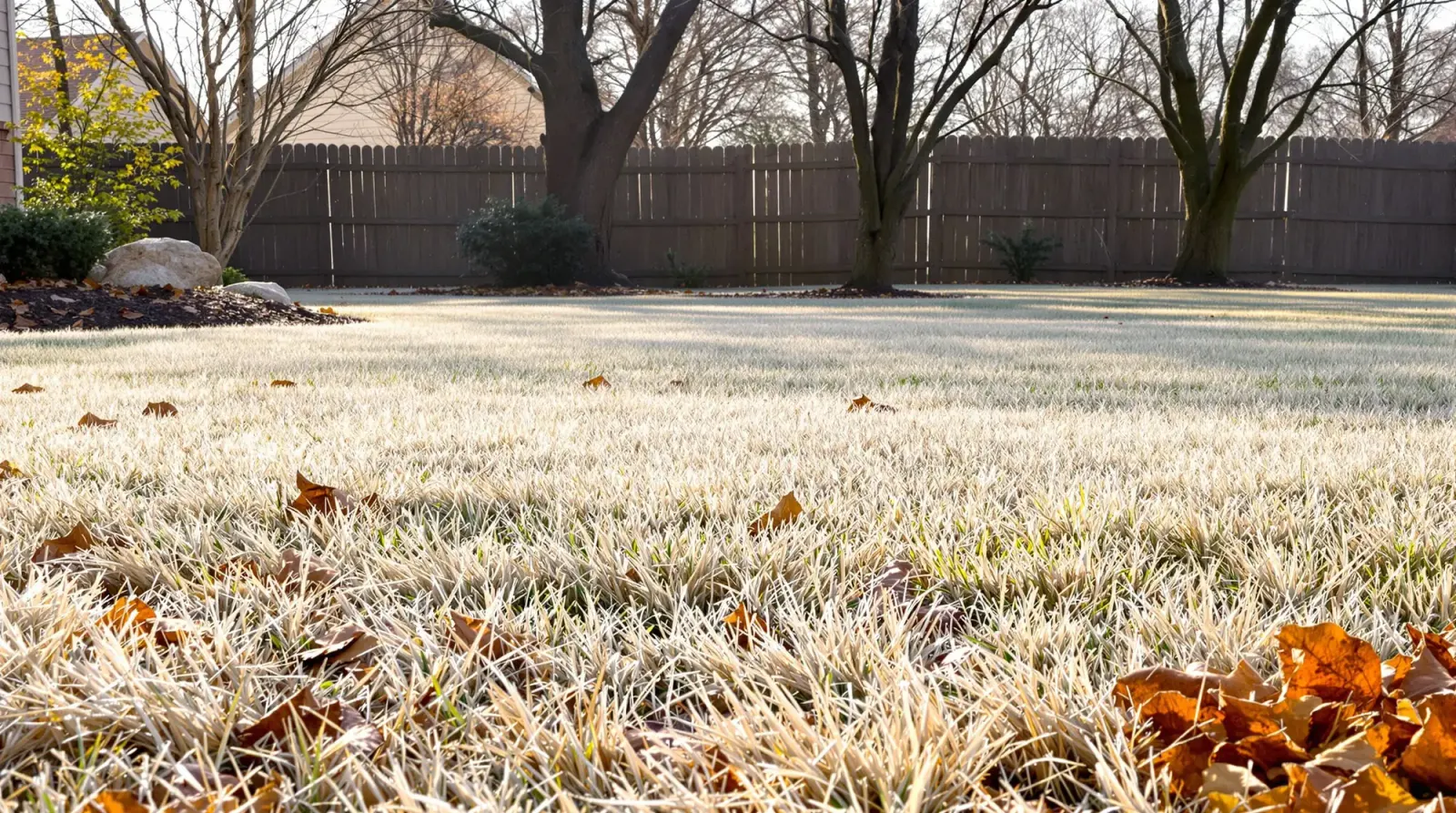
Lawn care in December is mostly restraint. Clear fallen leaves, stay off frosted grass, skip nitrogen fertilizer, water only after a long dry spell and service the mower. What you do depends on your grass: cool-season lawns such as fescue keep growing in mild spells, while warm-season lawns go dormant and need very little.
Use this page with the garden planting calendar for the rest of the month's jobs. The advice below comes from university extension services in the US South and Midwest, and each tip names its source. Local climate varies, so check timing against your own county extension office.
Why now: a few small mistakes in December, such as walking on frozen grass or leaving a leaf blanket in place, show up as bare, brown patches in spring.
At a glance: December lawn checklist
- Leaves: remove them or mulch them with the mower.
- Traffic: keep feet, mowers and vehicles off frosted turf.
- Fertilizer: skip nitrogen. Potassium only if a soil test calls for it.
- Water: only after weeks without rain, on a milder day.
- Mowing: fescue yes, if it is still growing. Dormant warm-season grass no.
- Weeds: scout early in the month while they are small.
- Salt: use less, and keep it off the lawn edge.
- Equipment: drain or stabilize fuel, change the oil, sharpen the blade.
Know your grass first
Cool-season grasses (tall fescue, Kentucky bluegrass, perennial ryegrass) grow in cool weather and can stay green through mild winters. Warm-season grasses (bermudagrass, zoysia, centipede, St. Augustine) slow down and turn straw-brown when it gets cold. Brown dormant grass is not dead. Clemson HGIC notes that in milder climates some warm-season lawns do not go fully dormant, which is why its advice differs by region. If you are not sure which type you have, look at the lawn in July: grass that thrives in summer heat is warm-season.
Leaves: clear them or mulch them
Clemson HGIC says to keep tree leaves off the lawn, because a leaf-covered lawn cannot make the carbohydrates it needs for cold tolerance. Purdue gives a second reason: leftover debris blocks light and gas exchange. Purdue suggests mulching, raking or another removal method. Clemson's December bulletin says "Mulch those leaves!" If the layer is light, run the mower over it. If it is thick enough to hide the grass, rake or blow it off.
Keep off frosted grass
Purdue says to avoid walking on turf before the frost has melted. Ice crystals rupture the cell walls of the leaves, and the grass blackens and then browns after foot or vehicle traffic on frosted turf. The damage does not show until days later. On frosty mornings, wait for the sun to melt the frost before you cross the lawn, and park carts and trailers elsewhere.
Fertilizer: skip it
For warm-season lawns, Clemson HGIC is direct: do not apply nitrogen fertilizer at this time. It says potassium has been shown to improve cold tolerance, so apply it only if a soil test shows the soil needs it. Mississippi State Extension says to wait until March to fertilize warm-season grasses, because fertilizing in January or February encourages weeds while the grass is not growing.
Purdue gives the same rule for dormant turf of any type: avoid fertilizer and broadleaf herbicide once the turf is dormant, because the grass cannot use the nutrients and weeds move herbicide too slowly for it to work well.
Watering: only when it is dry
December is not an irrigation month for most lawns. Clemson HGIC says some warm-season grasses may benefit from winter watering, but only when absolutely necessary, because excessive water in the cool season can leave turf damaged by spring. Its general advice is to water during one of the occasional warmer days after rain has been absent for several weeks. For fescue and other lawns still growing in a warm, dry spell, it suggests about 1 inch (25 mm) of water per week.
Mowing
| Grass | December mowing | Source |
|---|---|---|
| Fescue (cool-season) | Expect regular mowing while it grows. Follow the one-third rule: never remove more than a third of the blade at once. | Clemson HGIC |
| Warm-season, mild winter | Light mowing may be needed until the grass is fully dormant. | Clemson HGIC |
| Warm-season, dormant | Little or none. Clemson suggests raising the cut by ½ inch (about 1 cm) before winter to promote deeper roots. | Clemson HGIC |
Weeds: scout early
Clemson HGIC says early December is a good time to scout for winter weeds, because they are still small and a post-emergent herbicide works better on small weeds. Treat broadleaf weeds on a mild day and follow the label. Per Purdue, do not spray broadleaf herbicide on grass that has gone dormant. Mississippi State Extension suggests planning a pre-emergent herbicide for next fall, and Clemson lists a pre-emergent herbicide against annual bluegrass among its fall winter-prep steps.
Salt and snow near the lawn
The University of Minnesota says turf near walks and roads takes the most deicing salt: high salinity can cause root damage and dehydration, leading to yellowing and death. Its rules are simple. Use less ("more is NOT better"), sweep up loose grains on dry surfaces, remove snow before applying any deicer, and avoid piling salty snow on shrubs. Sand adds traction but does not melt ice. For repairs next year, it recommends fine fescue or a salt-tolerant mixture in seed or sod.
Skip these in December
- Core aeration. Clemson says compacted soil lowers a lawn's cold tolerance, but aerate in spring after green-up, not now.
- Overseeding warm-season lawns. Clemson generally recommends ryegrass overseeding only for bermudagrass, because of the extra inputs and competition.
- Heavy watering, as covered above.
Service the mower
If the lawn has stopped growing, December is the time to prepare the mower. Oregon State Extension calls emptying the gas tank the most important step: start the engine, let it warm up about 30 seconds, shut it off, siphon out the gas, then restart it and let it run until it stops. Gasoline containing ethanol attracts moisture, which can damage the engine. The same article also lists a new spark plug, a new air filter, an oil change and checking the plug gap. Purdue adds that you should have the blade sharpened this winter, which helps the turf and avoids the spring rush. Check your owner's manual for exact parts and procedures, and disconnect the spark plug before working near the blade.
What we could not confirm
Extension advice differs by state and grass type, and we did not find one source that covers every region. Snow mold treatment, fertilizer timing for cool-season lawns in the far north and exact dormancy dates are left out here because they depend heavily on local climate. Your county extension office can give timing for your area.
That is the lawn done for the year. For the rest of your winter jobs, from tools and hoses to beds, use our winter garden checklist.
Frequently asked questions
Should I fertilize my lawn in December?
Usually not. Clemson HGIC says not to apply nitrogen to warm-season lawns this late, and Purdue advises avoiding fertilizer once turf is dormant because dormant grass cannot use the nutrients. Mississippi State Extension says to wait until March to fertilize warm-season grasses. Add potassium only if a soil test says it is low.
Should I water my lawn in December?
Only if it has been dry. Clemson HGIC says some warm-season lawns can benefit from winter watering but warns to water only when absolutely necessary, because too much water in the cool season can damage turf by spring. For fescue it suggests about 1 inch (25 mm) per week if warm weather persists with little rain.
Is it bad to walk on frosty grass?
Yes. Purdue says to avoid walking on turf before the frost has melted. Ice crystals rupture cell walls, and turf blackens and browns after foot or vehicle traffic on frosted grass.
Do I need to mow in December?
It depends on your grass. Clemson HGIC says fescue still needs regular mowing, using the one-third rule, and warm-season lawns may need light mowing in milder winters until fully dormant. If the grass has stopped growing, put the mower away.
Should I rake leaves off the lawn in winter?
Yes, or mulch them with the mower. Clemson HGIC says to keep tree leaves off the lawn because they block the grass from making the carbohydrates it needs for cold tolerance. Purdue adds that heavy leaf debris blocks light and gas exchange.
Sources
- Clemson HGIC, This Month in Your Garden: December 2024
- Clemson HGIC, Prepare Warm-Season Lawns for Winter
- Purdue University, Winter Lawn Care Tips (2021)
- University of Minnesota Extension, The effects of deicing salts on landscapes
- Oregon State University Extension, End-of-season garden tasks make for a smoother start in spring
- Mississippi State University Extension, Winter Lawn Guide